Why Texas Sun Destroys Paint on South and West Walls
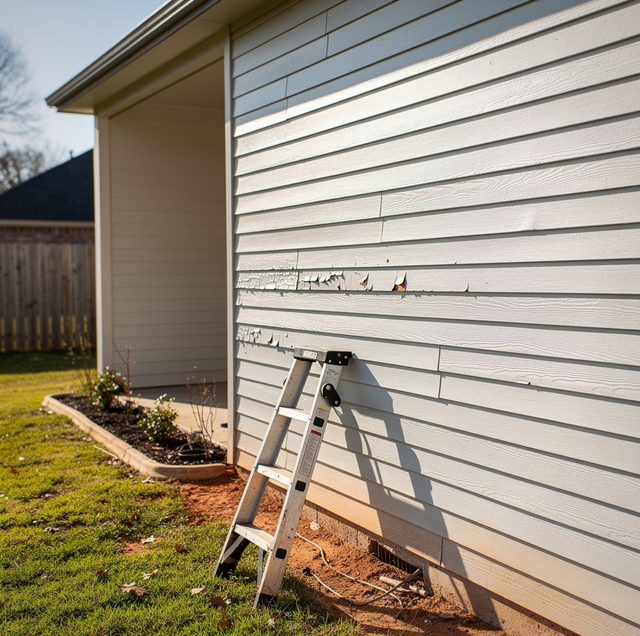
The four walls of one house are not on the same clock. They were painted the same week, out of the same cans, by the same crew, and they are running that one paint job at four different speeds. By the time the west wall is chalking and losing its color, the north side of the same house can still look nearly freshly painted, and nothing about the product explains the gap. Exposure does. How many hours of direct sun a wall takes, how hot it gets while it takes them, and how quickly it dries afterward decide how long that film holds, and no two sides of a house get the same combination.
Same Paint, Four Different Rates of Failure
Exterior paint is a resin binder that holds pigment particles on the surface, bonded to whatever the wall is made of. Three things work against that film. Ultraviolet light breaks the binder apart chemically. Heat moves the substrate underneath and works the film mechanically. Moisture attacks the bond from the back. Every wall on the house gets all three. What changes from one side to the other is which one dominates and how hard.
| Wall Orientation | Sun Exposure Pattern | What Tends to Show Up First |
|---|---|---|
| South-facing | Direct sun most of the day, most months of the year | Chalking, color fade, gloss loss |
| West-facing | Fewer hours of direct sun, but the most intense afternoon heat | Cracking and a brittle film from thermal cycling |
| East-facing | Morning sun, during the cooler part of the day | Slower fading; chalking still develops over time |
| North-facing | Little to no direct sun | Slowest paint failure from sun, but more prone to mildew and moisture issues in shade |
Sorted by wall rather than by mechanism, the pattern stops looking random.
The West Face Takes Fewer Hours and Harder Ones
A west wall takes fewer hours of direct sun than a south wall does, and they are the hardest hours of the day. Afternoon light lands on a surface that has been warming since mid-morning, so the wall peaks at the same time the air does, then sheds that heat quickly once the sun drops behind it. Siding, sheathing, and fasteners expand through the rise and contract through the fall, every day the wall sees sun.
The paint has to move with it all. Every coating has a limit to how many expansion and contraction cycles it can absorb before the film fatigues, loses flexibility and turns brittle, and the wall that swings through the widest daily range reaches that limit first. Once it does, the failure looks nothing like a faded wall: fine cracking across the film, edges lifting at siding laps and butt joints, and a weathered patch that flakes loose in chips under a fingernail instead of just marking.
Color feeds straight into this. A dark wall in direct sun runs hotter to the touch than a light one beside it, which widens the same daily swing that fatigues the film and speeds the binder breakdown at the surface. None of that puts dark colors off the table on a hot wall. It means exposure belongs in the color conversation the same way it belongs in the product conversation, and a dark color on a wall that already runs hot deserves a premium exterior line built for that exposure rather than a builder-grade product.
Press a strip of tape onto a weathered section of wall, smooth it down, then pull it back sharply. Paint that lifts away with the tape has already lost its grip; paint that stays put still has some life left.
The South Wall Collects the Longest Hours in the Sun
A south wall never reaches the peak surface temperature a west wall does, but it collects direct light for more of the day and more of the year than any other side of the house. Ultraviolet energy breaks the polymer chains in the binder apart, and that process does not stop while a wall keeps taking direct sun.
As the binder degrades, it loses its grip on the pigment sitting closest to the surface. Run a palm down a south or west wall that has been at it for years, and the hand comes away dusted with a fine, pale powder. That chalk is the paint's own resin, broken down and letting go of the pigment it was holding. Gloss goes first, because the smooth surface layer is the part sunlight reaches. Color follows unevenly, since ultraviolet light breaks down some pigments faster than others, and reds and deep tones tend to fade ahead of more stable colors.
A south wall accumulating that damage all day is on a different schedule from an east wall catching an hour or two of early light.
The Shaded Sides Dry Slowly and Fail Differently
The north side gets the least direct sun and ages the slowest on the paint's chemistry, and it fails differently. Shade keeps a wall cool and damp longer after rain or a heavy dew, and a surface that stays damp grows mildew, which reads as gray or black speckling in the film rather than as fading. An east wall sits in between. It takes real sun, but during the coolest hours of the day, so it fades slowly and dries early once the light comes around.
Moisture also arrives from the other direction. Water vapor pushed out through a wall assembly, by indoor humidity, an unvented bath fan, or plain temperature difference across the wall, has to dry somewhere, and the paint film is the last thing standing in its way. Where that vapor cannot leave fast enough, it collects behind the film and breaks the bond from the back. Paint failing that way does not fade or chalk. It blisters and lets go in defined areas while the film itself still looks sound.
The part that catches people out: a hot, sun-facing wall dries a damp assembly faster than a shaded one does, so a north wall with a moisture path behind it can fail before a south wall taking far more sun. Sun sets the pace of the chemical failure, not of every failure a wall can have.
The Surface Underneath Changes the Timeline
Paint is only as good as its bond to what it covers, and the same exposure can do different things depending on what lies beneath the film. Wood siding moves with humidity and temperature more than fiber-cement or stucco does, so a film on wood has to flex further just to keep up with the board underneath, and on a wall already cycling hard from heat, that is two demands on one coating. Fiber-cement is dimensionally stable by comparison and asks less of the film on a sun-facing wall. Stucco and masonry store heat and release it slowly, so those surfaces stay warm well after the sun leaves, and an unsealed masonry wall can push moisture out through the coating from behind.
Softness is the other thing the substrate decides. Trim you can push a screwdriver into is rot, and rot is a repair to make before repainting, not a defect a coat of paint covers.
Prep Work Decides How Long the Next Coat Lasts
Most early repaint failures trace back to what happened, or did not happen, before the first coat went on.
Chalk comes off first: New paint applied over loose chalk bonds to the powder rather than to the wall, and it lets go early no matter how good the product is.
Cracked or lifting film gets scraped back to a sound edge: Feathering over a failing edge telegraphs every ridge underneath the new coat within a season.
Bare wood gets primer before a finish coat: And every gap around trim, siding seams and fastener heads gets caulked before painting rather than after, or water finds the same path behind the new film that it found behind the old.
Scraping or sanding paint on a two-story wall means ladder and fall exposure. Houses painted before the late 1970s may have older coats that are lead-based, and disturbing them is specialist work, not a weekend scraping job.
When Exposure Is the Only Thing Wrong
Not every sun-worn wall is hiding a second problem, and it is worth saying so plainly. If the substrate under the film is sound, the caulk joints are intact, and nothing is blistering in defined areas, then years of chalking and fading on a south or west wall is the paint doing exactly what sun does to paint. That wall needs a proper wash, correct prep, and a quality exterior coating put back on sooner than the shaded sides will need theirs, and nothing else. A homeowner told the whole assembly is suspect is often looking at a wall that simply spent more hours in the sun than the rest of the house.
Building the repaint schedule around each wall's exposure rather than around one date for the whole house is most of the adjustment. Where the work has to go deeper, it is because a wall is telling you something about its bond or its substrate rather than about the sun.
Frequently Asked Questions
It absorbs more heat, but the pigment matters as much as the shade. Some premium exterior lines, including certain Sherwin-Williams formulas, use pigment technology the manufacturer says reflects more infrared energy, so a dark color in one of those lines absorbs less heat than the same shade in an older formula would.
No, and washing alone is sometimes not enough either. A TSP-based cleaner is the traditional way to strip chalk, worked with a stiff brush rather than just rinsed, and the test afterward is a dry hand run across the wall. On a heavily chalked wall that still marks a palm after washing, a chalk-binding primer goes on before any finish coat.
It changes which failure arrives first. Stucco, brick and block are alkaline, and alkali reaching a standard latex binder can break it down from behind, leaving a soft, tacky or streaked film, a reaction the trade calls saponification. The answer is an alkali-resistant masonry primer over a substrate left to cure, since no topcoat holds on a surface chemically attacking it.
Chalking wipes off as dry powder, leaving the film underneath mostly intact, and it wipes off everywhere on that wall rather than in zones. Moisture failure is localized: it maps to a bathroom, a kitchen wall, or a gutter run rather than to a compass direction, and a pin-type meter pressed to the sheathing at that spot reads well above the surrounding wall.
Painting a west wall in direct afternoon sun on a hot day is best avoided: surface temperatures there can run well above the air temperature, which can cause the film to skin over before it finishes curing beneath. Scheduling that wall for early morning or a cooler stretch of the day avoids the problem.
Elastomeric goes on many times thicker than a standard exterior coat and bridges hairline cracks, which helps with thermal cycling. The tradeoff is that it is difficult to remove and difficult to recoat with anything else, so it commits the wall to that system.
A house does not fail evenly, because it is not exposed evenly. Reading a wall's actual exposure, not just its paint, is what tells you whether the fix is a repaint, a substrate repair, or both.
Get an exterior repaint evaluation — we'll look at what's actually driving the failure on your sun-facing walls before recommending a color, product, or repair. Palacios Construction Group serves Willis, Conroe, and The Woodlands. Call (936) 828-8664.
