Seamless Gutters in Conroe and the Greater Houston Area
Gutters are the quiet system that protects your home from the ground up, channeling our heavy rain away from the roof, the siding, and most importantly the foundation. Palacios Construction Group installs seamless gutters and downspouts for homeowners across Conroe, Willis, the Lake Conroe area, and greater Houston, sized, pitched, and drained to actually move the volume of water our storms deliver. Most homeowners never think about them until water is pooling at the foundation or running down the walls, by which point the damage has often already started.
What separates gutters that protect a home from ones that overflow, sag, and dump water at the foundation is in the details: the right size for the roof, the correct pitch to the downspouts, enough downspouts, and drainage that carries the water well away from the house. Because we install gutters correctly and understand how water and our clay soils threaten a foundation, you get a system that performs in a real Texas downpour. A gutter that looks fine on a dry day can still fail completely in the first hard rain, because the things that make it work are not visible from the curb.


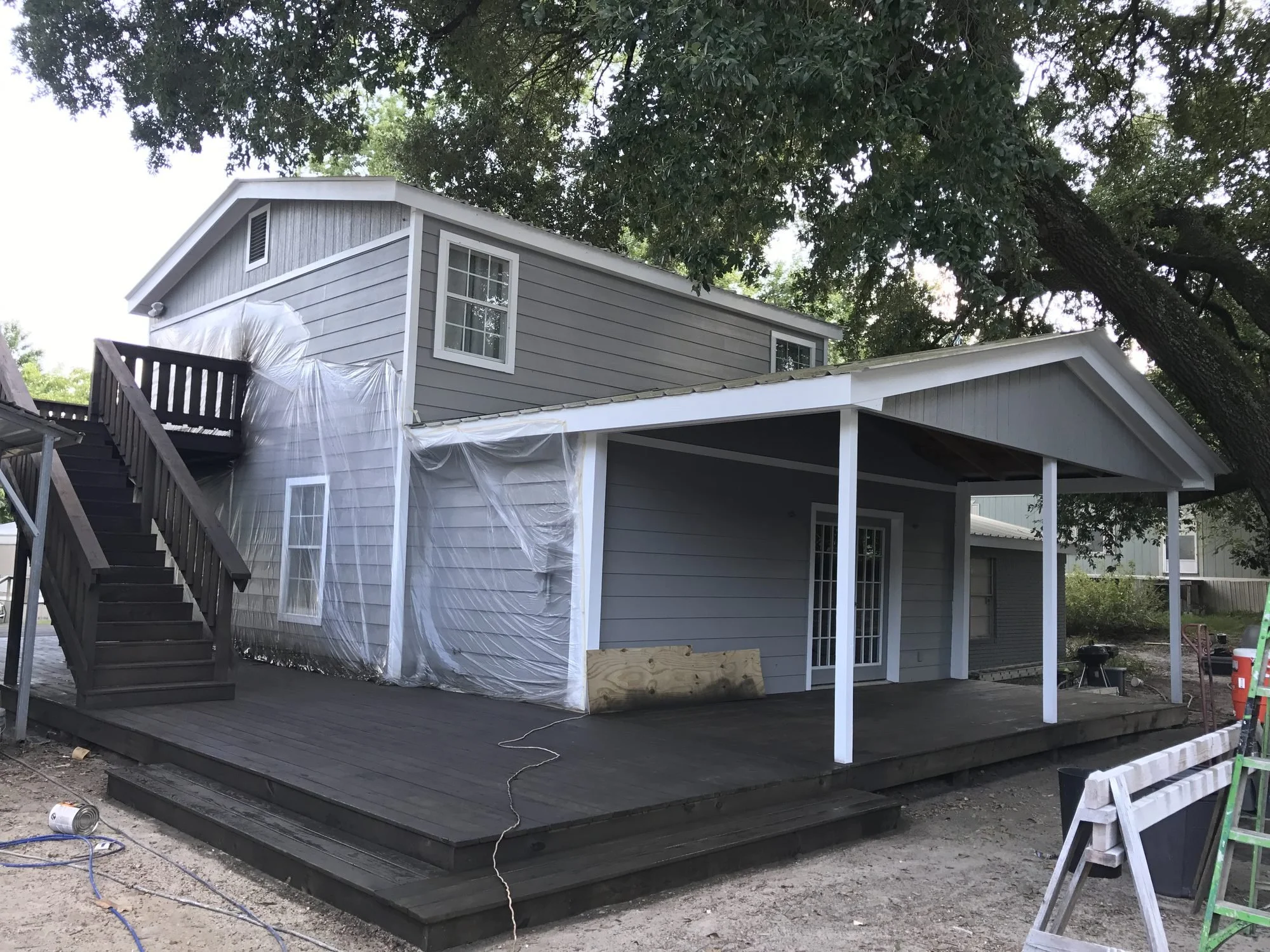
How a proper gutter system compares to a quick hang
"Easy to work with, no hidden costs, excellent work. They handled our exterior and gutters and I plan to use them again."
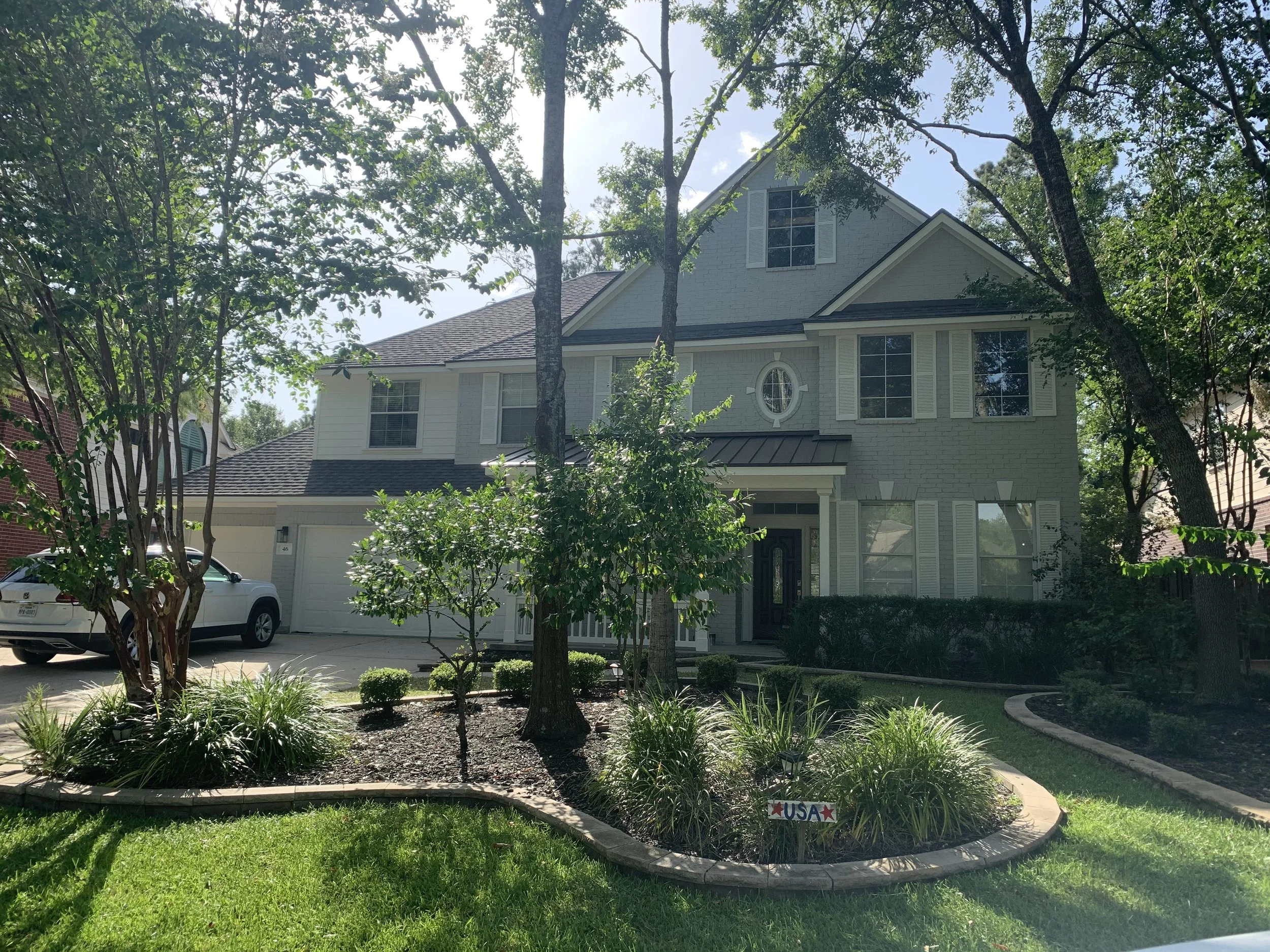
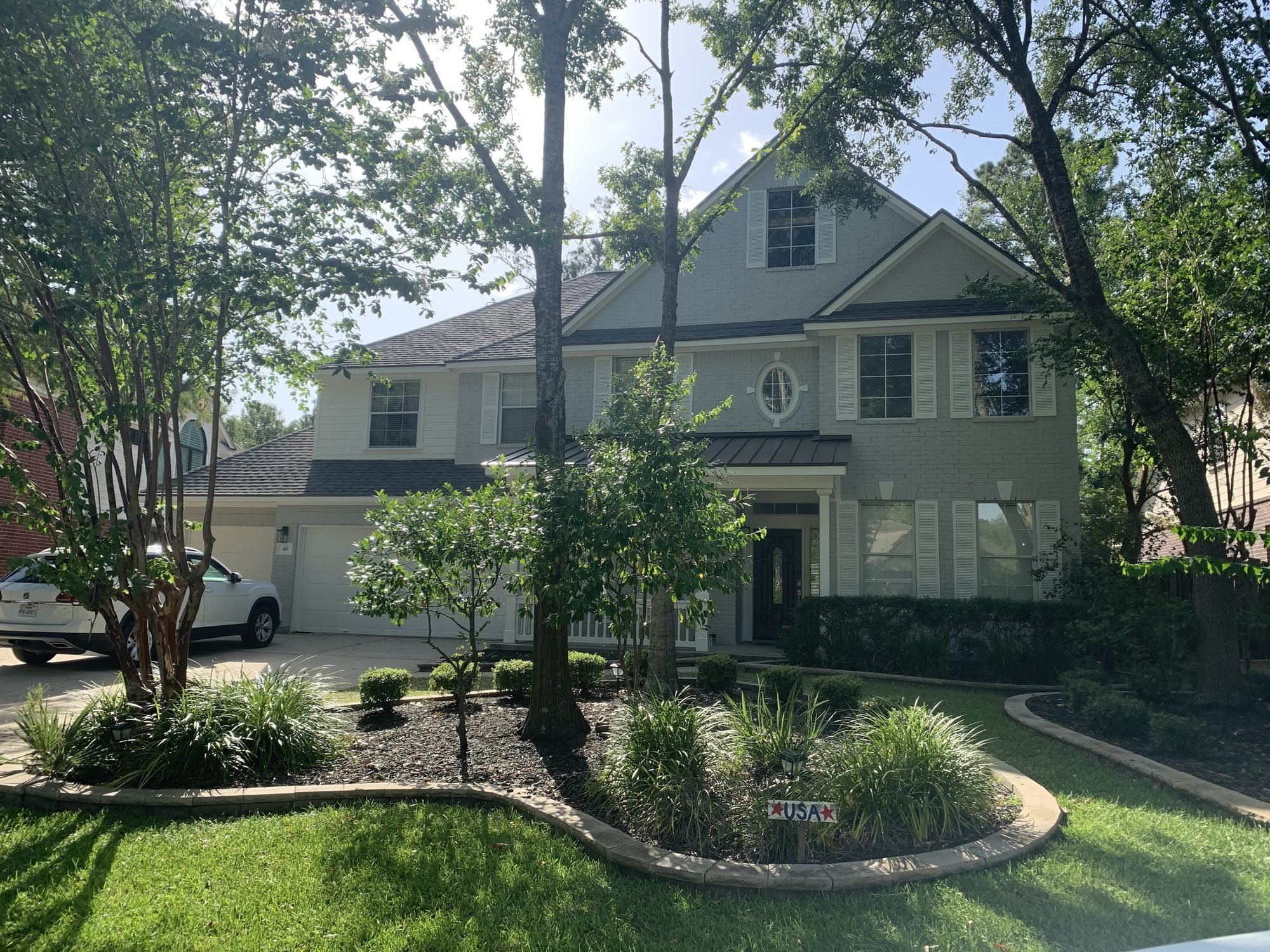
We regularly replace old, undersized gutters that let water dump straight down the siding and collect at the foundation instead of carrying it away. Sizing the system correctly, adding enough downspouts, and routing the discharge well clear of the house is what actually keeps a foundation dry through a hard Texas rain.
Gutters in the Lake Conroe Climate
Our rain, soil, trees, and homes all shape how gutters should be sized and installed here. These are the realities we install around.
Expansive clay and the foundation
Our expansive clay is the reason gutters matter so much here. When roof water pools against the slab, the clay swells and moves, and that movement is a leading cause of foundation trouble in our area. Gutters that carry the water well away from the house help keep the soil around the foundation stable, which is why we treat drainage away from the slab as the whole point of the job. In a drier climate, gutters are a convenience, but on our soils they are among the cheapest forms of foundation protection a homeowner can buy.
Heavy, sudden rain
Our area sees more than 50 inches of rain a year, much of it in sudden, intense downpours that overwhelm undersized gutters. We size the gutters and downspouts for the real volume our storms deliver, so the system carries the water instead of overflowing and sheeting down the walls and onto the foundation in the heaviest rain. It is the peak intensity, not the yearly total, that floods a gutter, so we size for the worst storm rather than an average day.
Trees and debris
Our wooded lots around Lake Conroe drop leaves, needles, and debris that clog gutters and cause overflow. We can install gutter guards and leaf protection and place the system to shed debris, so the gutters keep flowing rather than clogging and backing up, which is a common cause of overflow here. A clogged gutter overflows in exactly the same way an undersized one does, so on tree-heavy lots, leaf protection is often what keeps a well-built system working.
Humidity, rot, and the fascia
Our humidity rots the fascia and trim that gutters hang on, and old, leaking gutters accelerate it. We check the fascia when we replace gutters and repair any rot, so the new gutters mount to sound wood and do not pull away. As a full remodeler, we handle that fascia repair as part of the job.
Storms and secure hanging
Our storms bring wind as well as rain, and poorly hung gutters pull loose or tear away. We hang gutters with secure hangers at the right spacing and fasten them to the sound fascia, so the system stays put during storms that rip down loosely hung gutters.
Protecting the whole exterior
Gutters protect the siding, the trim, the doors, and the foundation all at once, so they are part of the whole exterior system. Because we also do siding, paint, and concrete, we see gutters as one piece of keeping the home dry from the roof to the slab, and we coordinate them with the rest of the exterior.
How Gutters Are Priced
Gutters are priced by the linear footage, the gutter size, the number of downspouts and drainage runs, any guards, and any fascia repair, so a simple replacement and a larger system with guards and added drainage are different projects. We give you an accurate written estimate after seeing the home. A straightforward replacement and a system that needs added downspouts, drainage, and fascia repair sit in very different places, so we price after seeing the home.
Free on-site estimate
We do not charge for estimates. We assess the roof, the drainage, and the fascia, plan the system, and give you a written quote by the linear foot at no cost and no obligation.
Priced by the linear foot
We price by the linear foot and lay out the gutters, the downspouts, the guards, and any drainage and fascia work separately, so you see what each part costs and can choose the system that fits both your roof and your budget.
What moves the price
The biggest drivers are the linear footage, the gutter size, the number of downspouts and drainage extensions, gutter guards, and any fascia repair behind old gutters. We lay each line out clearly so you can choose the scope that fits your budget.
What Goes Into a Gutter System Done Right
Gutters look simple, but a system that actually protects the home takes sizing, pitch, and drainage know-how. Here is the expertise behind ours.
Sizing the system for the roof
A gutter has to handle the water the roof sheds in a real downpour. We size the gutters and the number of downspouts to the roof area and pitch, so the system carries the peak volume our storms deliver. Undersized gutters are the most common reason a system overflows, and sizing it right is the first thing that makes gutters actually work here. A large roof can shed a surprising amount of water in minutes during one of our storms, so sizing the system for that peak is what keeps it from being overwhelmed.
Setting the correct pitch
Gutters have to slope toward the downspouts, just enough to move the water without looking crooked. We set the correct pitch along every run so the water flows to the downspouts and does not pool, sag, or sit in the gutter. Getting that subtle slope right is the difference between a gutter that drains and one that holds water and pulls loose. It is a small detail that takes a practiced eye, since too little slope holds water and too much looks wrong against the roofline.
Placing and sizing downspouts
Downspouts are what actually get the water down and out, and too few or too small means overflow. We place enough downspouts of the right size for the roof, position them where they drain best, and make sure each run has the capacity it needs, so the water has a clear path off the roof and away. A gutter can be perfectly sized and still back up if the water has nowhere to go, so the downspouts are just as important as the gutter itself.
Draining away from the foundation
Getting water into the gutter is only half the job; getting it well away from the house is the rest. We run extensions, splash blocks, or drainage so the downspouts discharge clear of the foundation rather than dumping right at the slab. On our clay, this discharge point is critical, and it ties directly to protecting the foundation. A downspout that simply dumps at the base of the wall just moves the pooling problem a few feet, so where the water finally lands matters as much as the gutter above it.
Seamless gutters and sealed joints
Seams are where gutters leak, so we install seamless gutters formed to length with sealed end caps and miters, which means far fewer joints to fail. Fewer seams means fewer leaks over the life of the system, which is why seamless is the standard we install for a long-lasting, drip-free gutter. Every joint in an old sectional gutter is a future leak, which is why eliminating them is one of the biggest upgrades a homeowner gets.
Mounting to the sound fascia
Gutters are only as secure as the fascia they hang on. We check the fascia and trim for rot, repair it where needed, and fasten the gutters with secure hangers at the right spacing, so the system stays put and does not pull away in a storm. As a full remodeler, handling that fascia is part of the job for us, not someone else's problem. Hanging heavy, water-filled gutters on soft, rotted fascia is a setup for failure, which is why we deal with the wood first rather than after.