Where Exterior Wood Rot Starts and How Far It Really Runs
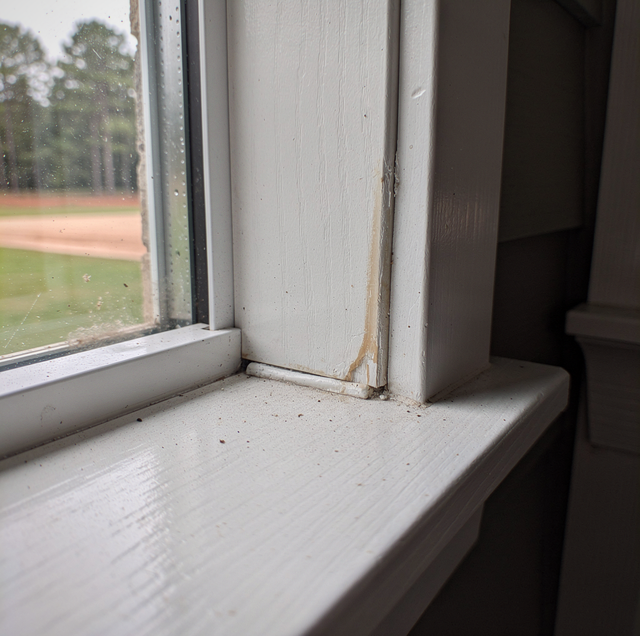
A decay fungus needs four things to get established in a board: moisture held in the wood above a level it can use, oxygen, a moderate temperature range, and cellulose to feed on. Take any one of those away and the fungus stalls, even in a board that stays damp for weeks. Leave all four in place, and it keeps working, quietly, for as long as the conditions hold.
That list explains almost everything that follows. Once you know what a decay fungus needs, you can predict where on an exterior it gets started first, and that order has less to do with which wall takes the worst weather than with which pieces of wood dry out between wet periods and which never quite do.
Three Shapes That Stay Wet Longest
Three geometries hand a fungus its opening before the rest of a wall has aged at all.
Field cuts: A cut made with a saw near the end of a job is easy to leave bare, and the open-cell structure at the cut face draws in water far faster than the coated face of the same board.
Ground and roof contact: Splash-back off a hard surface, mulch banked against the base of a wall, and water sheeting off a roof plane onto the trim below all keep those boards damp long after everything above them has dried.
Sealant beads: A cracked bead around a hose bib, a light fixture, or a vent doesn't look like much, but it opens a path down the fastener and into the wood behind it.
What happens next, inside the board, determines how far the damage runs.
Horizontal Surfaces That Hold Water
A vertical board sheds the rain that hits it the moment the water stops falling. A horizontal one holds it instead. Window sills, the flat cap on a porch column, a horizontal trim return above a door: any surface that runs level rather than sloped gives water time to sit on the wood instead of running off.
Sill horns: The small projecting ends at either side of a window sill carry both conditions at once, horizontal and end grain together, which is why decay at a sill tends to show up there before it shows on the flat face below the glass.
Where Two Pieces of Trim Meet
A seam is not one surface. It's two surfaces pressed together with a bead of sealant asked to keep them apart from the weather. The vertical trim wrapping an outside corner meets at a joint that opens and closes with every swing in temperature, and caulk that looks intact from six feet away can already have let go at a scale nobody sees from the ground.
Casing-to-sill joints: The seam where a window's horizontal sill meets the vertical casing beside it works the same way. The two pieces were never one board, and that seam carries a horizontal surface and a cut end in the same spot, one that's easy to caulk once and never check again.
How Far Moisture Travels Once It Is in the Board
Wood does not take on moisture evenly, and it does not move it evenly either. Below the point at which the cell walls are saturated and free water begins to collect in the cell cavities, a decay fungus has nothing usable to work with. Above it, the same board becomes food. That threshold, rather than how much rain a wall takes, is what separates a board that gets wet and dries from a board that rots.
Once decay is established, it travels along the grain far more readily than across it. Water entering an unsealed cut end runs the length of the board rather than spreading sideways into the piece next to it, which is why a rotted casing leg can be soft well up from the joint while the board fastened beside it remains sound. It is also why the visible damage tends to be at one end of a piece, while the boundary is somewhere in the middle.
What a Builder Reads at the Decay Boundary
Pull the trim off a wall, and the first thing that reaches a builder is rarely a measurement. It's a smell: a damp, earthy odor coming out of the cavity, distinct from ordinary wet lumber. Wood that is just wet does not smell like that. Wood a fungus has been working on for a while does. The smell says decay is active. It says nothing about how far it runs, which is what the probe is for.
Probe resistance: An awl or a screwdriver pushed into the board at intervals along its length reports where it stops sinking, and the line a builder marks is the point where resistance turns consistent, not the point where the wood stops looking discolored. Soft wood is obvious. The transition past it has to be found by hand, one push at a time, working out along the grain in both directions.
Trim or framing: The same probe answers a second question, which is whether the decay stopped at the trim or reached the framing behind it. A soft trim board is a replacement. A soft framing member is a different job, since the wall is carrying load through the piece that has to come out.
Opening long-closed decay releases fungal spores and dust into air that has been still for years, so respiratory protection belongs on that crew. A wall opened for trim replacement should not be left open through a rain event.
Why the Board Count Is Not Set Before the Boundary Is Read
Decay extends past the point where a board reads soft, so the number of boards a job replaces is set by where the probe finds consistent resistance, and that reading cannot be taken from the driveway. A crew that commits to an exact count before the boundary has been probed is guessing, whether that gets said out loud or not.
The honest version of an estimate names the process instead of a number: which sections get opened, what the crew checks for once open, how far past the last soft spot the resistance stays uneven, whether the framing behind is sound, and an acknowledgment that the real count doesn't exist until that boundary has been found. A homeowner handed a clean number up front, and a change order later was sold as the easier conversation instead of the accurate one.
None of this is a reason to leave a soft board alone. It's a reason to treat opening the wall as the start of the estimate rather than a formality ahead of a number already decided. It's also where rotted trim tends to get caught anyway, since pulling boards ahead of a full exterior repaint means someone is already looking closely at each one.
Frequently Asked Questions
Brown rot fungi break down the cellulose in wood and leave it dry, crumbly, and checked into small cube-shaped cracks, while white rot fungi break down lignin too and leave wood pale, stringy, and spongy instead of cubical. Soft rot works differently again, moving from the surface inward in wood that stays wet almost constantly, part of why it turns up on posts and sills more than on vertical trim. Knowing which pattern is present tells a builder something about how the decay traveled, before a board gets pulled.
In some cases, yes. Certain water-conducting decay species, sometimes called dry rot, can grow thin strands across masonry or concrete, or through a gap in framing, to reach a fresh piece of wood some distance from the original wet spot, carrying moisture with them as they travel. It is uncommon next to ordinary local decay, but it explains why a builder occasionally traces damage well past the wall section where the leak started.
A borate treatment is preventive and arresting, not restorative. It works on wood that is still structurally sound by making the cellulose harder for a fungus to digest, and it needs bare, reasonably dry wood to soak into, so it is applied to sound wood next to a repair rather than brushed over boards already gone soft. Coating over active decay with a borate product doesn't restore the wood.
An epoxy consolidant is a thin resin, brushed or injected into wood fibers that have softened but remain physically present, to re-bond them from the inside once it cures. That's different from the two-part epoxy putty sold for filling a cosmetic gouge or a woodpecker hole, which sits on top of sound wood and isn't built to penetrate or restore anything load-bearing underneath it.
Given enough time and the wrong exposure, yes. Preservative-treated lumber is sold at different retention levels, and a board rated for above-ground use carries less preservative than one rated for ground contact, so an above-ground board set where it stays wet against soil sits outside what its rating was assigned for. A field cut through treated stock also exposes the untreated core at the cut face, which is why a brush-on field treatment is applied to every cut end before the piece is installed.
Because the replacement piece has to land on something solid. The cut on a trim board gets carried back to the nearest sound framing member so the new board has a fastenable edge at both ends, and that member frequently sits past the point where the decay itself stopped. The boundary sets the minimum; the framing layout sets where the saw goes.
Rot doesn't announce itself in a straight line from the outside in. It follows moisture and grain direction into the same handful of shapes on almost any exterior, which is why where you find the first soft spot matters less than where the wood on either side of it stops giving under a probe.
Have the soft spots read by a builder — a probe-and-open assessment that tells you where the decay actually stops before a board count is put on paper. Palacios Construction Group serves Willis, Conroe, and The Woodlands. Call (936) 828-8664.
