Impact-Rated vs. Standard Windows: What the Rating Changes
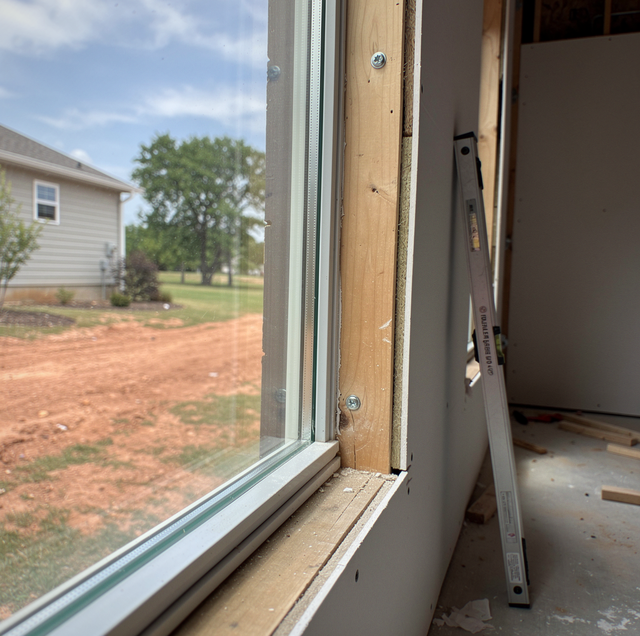
In a test lab, a complete window is mounted into a rigid wall section framed like a house wall: glass, sash, frame, hardware, and fasteners, all as one assembly. Then something is fired at it. One specimen takes a length of lumber driven end-on into the glass; another takes a barrage of small projectiles. Whatever is left goes into the second half of the test, loaded with alternating pressure, pushed inward and pulled outward again and again, to see whether the opening it fills is still closed.
The rating is a record of that event. More useful than any published figure is knowing what the event covers.
Windows and doors are sourced and installed by a window-and-door specialist; a general contractor is not a brand dealer and carries no window line. What a builder owns is the opening: its framing, whether it is square and sound, the trim closing over it, and the coordination with that specialist.
The Construction Behind the Rating
A rated unit differs from a standard one at three points.
The interlayer: The rated lite is laminated, two plies of glass bonded to a clear plastic sheet under heat and pressure until it behaves as one piece. Two interlayer materials are standard: polyvinyl butyral, and a stiffer ionoplast that holds a cracked pane more rigidly. That laminate becomes one lite of a sealed insulating unit, with an air or argon space and a coated ply behind it.
The bond into the sash: In a standard window, the glass sits in a channel held by a snap-in or screwed glazing bead. A rated unit adds a bead of structural silicone tying the laminate to the sash, so the pane can't be levered out whole once the glass has cracked. An interlayer only helps while it's still held at the edges.
The frame and the hardware: Deeper extrusions, thicker walls, welded or reinforced corners, steel or aluminum reinforcement inside a vinyl frame where the design calls for it, and longer fasteners at every connection.
A rated unit's deeper sash and frame sections take their depth from the daylight opening rather than from the wall, so the glass area within a fixed rough opening is smaller than that of a standard unit. Where that proportion matters to how a room reads, it belongs in the drawings before a unit is ordered.
What Happens When Something Hits the Glass
The question the test asks isn't whether the glass survives. It's whether the hole in the wall stays closed.
Annealed and tempered glass: Annealed glass breaks into large shards that fall out of the opening. Tempered glass does something more complete: it releases its surface compression at once and converts to small blunt granules that clear the opening almost entirely.
Laminated glass: The plies crack everywhere, but the fragments stay stuck to the interlayer, and the interlayer stays anchored into the sash. You get a pane that looks destroyed and still spans the opening. A projectile may punch through and leave a hole the size of the object, but the pane does not depart the frame.
An opening that empties out stops being a window and becomes an inlet.
Laminated glass that has taken a strike is damaged glazing even while it holds. It can keep its shape and still not be an intact barrier. Keep people clear and have a specialist evaluate it.
What the Cycling Stage Can Report
A strike reports what the glazing does in one instant. Cycling reports whether what remains still behaves as an assembly when flexed inward and outward repeatedly.
Three findings emerge from that stage. Whether the interlayer is still bonded to the glass on both faces, since a laminate that has begun releasing its plies goes slack and stops carrying anything across the crack. Whether the frame's corners have opened, since a joined corner that works apart lets the sash rack out of square, and the lock misses its keeper. And whether the unit still seals, because a sash that no longer lands evenly on its weatherstrip is an air and water path while the glass still spans the opening.
Fatigue is the subject, not strength.
What the Extra Weight Rides On
A rated unit is heavier, and the frame and sash sections that carry that weight are deeper and wider than those of a standard window. A laminated lite is two plies of glass and an interlayer, where a standard lite is one, and it's only half of a sealed insulating unit. All of it hangs on the hardware.
Locking points: An operable-rated sash is usually held by a multi-point lock, one handle driving a bar along the sash edge into two or more keepers set in the frame, rather than a single latch at the center. A single latch leaves the sash corners free to lift off the weatherstrip under load, and the corners are where a sash is pushed hardest.
Hinges and balances: A casement's hinge arms and a hung window's balances are sized to the sash they carry. A coil or block-and-tackle balance specified for a standard sash will not hold a rated one at its set position, so those parts are matched to the unit rather than to the product line.
That duty shows up in use rather than in a showroom. A crank turns against more mass, and a hung sash is heavier to raise and lower under control, for as long as the unit is in the wall. Where an older rated unit starts misbehaving, the glass is usually not what changed: a keeper drifts out of line with the bar, a hinge arm develops play, a balance lets the sash creep down. Replacement hardware matches the sash weight, not just the brand.
What the Same Build Changes Day to Day
The laminated construction was engineered for one job and changes several others as a side effect.
Laminated glass carries a faint cast. Against a white wall, it reads slightly green or slightly warm depending on the interlayer, and that stacks with any low-emissivity coating. Standing beside the window rather than in front of it, the pane shows a slight shift of tone toward its edges, and a reflection crossing it bends very slightly where the interlayer sits between the plies. You notice it the first week in a room you know well, then mostly stop seeing it.
The same laminate damps sound, because the plastic layer interrupts vibration passing between the plies. It also resists being cleared out of its opening quickly or quietly, since a person-sized gap means cutting a bonded sheet of plastic rather than knocking glass out of a frame.
The Assembly Includes How It Was Fastened
Anchors: The test specimen was attached to its buck with a specific fastener type, spacing, and edge distance, and the manufacturer publishes that anchoring schedule alongside the rating. Substitute a fastener, open the spacing, or land a screw where nothing is behind it, and what sits in the wall is a different assembly from the one tested.
Behind the jamb there has to be something solid to reach: framing that is sound, not split, not soft from slow water, and not so far out of plane that the unit gets shimmed across a void. That's what an opening assessment is for: rot changes the scope before the glass is chosen. Whether a replacement goes in as an insert or as a full-frame unit is a separate decision, and it affects the anchoring the rating assumes.
What to Get in Writing Before the Units Are Ordered
The anchoring schedule is a specification, like the glass makeup or the frame material, and it is the part of the assembly built on site rather than in a plant. A few items belong on paper before an order goes in, each of them invisible or unverifiable once the casing is on.
| What to Get in Writing | Why This Item Decides Whether the Rating Describes Your Wall |
|---|---|
| The published rating paperwork for the exact unit ordered: that size, glass makeup and configuration | A rating is issued to one configuration, so a wider, operable, or differently glazed version of the same line is a separate test |
| The anchoring schedule: fastener type, length, spacing, edge distance, and what the fastener lands in | The one part of the assembly built in your wall rather than in a plant, and where a substitution changes what you own without changing the label |
| The glazing-stop and structural-glazing detail | A later repair that reuses an ordinary snap-in stop leaves a unit no longer built the way the tested one was |
| The frame label and the glass marking, and where each will sit once casing is on | Confirming what went in after trim is on means pulling something apart, so it gets photographed beforehand |
Every item there is either a published document or a photograph taken while everything is visible.
Frequently Asked Questions
A struck laminated unit is replaced as a complete sealed unit, not re-glazed on-site as an old single-pane sash can be. The laminate, spacer, seal, and second ply are one factory-made piece, so a new unit must be set into the sash, which means a lead time rather than a same-day repair.
Applied security film is a different product from laminated glass, tested against different criteria. Film bonds to one face of a pane already in the sash; a laminate is built into the glass itself, with a ply on both sides of the interlayer. Where a film system carries an impact approval, that approval attaches to the film together with a specific frame attachment as a tested assembly, not to the film alone, so the question to ask is: what configuration was tested.
The improvement lands mostly in the middle and high frequencies: voices, sharp traffic sounds, a dog, a slammed door. Low-frequency rumble from a truck or a compressor passes through much less changed, because that end of the spectrum is governed by mass and the width of the air space.
On a sliding patio door, the rating covers the interlock between panels and the anchoring of the track as much as the glass, because a large moving panel gets loaded out of plane there first. Entry and French doors are rated as assemblies, too, with the strike, hinges, and frame included in the testing, so a rated slab on ordinary residential hardware isn't a rated door.
A stone thrown by a mower, a ball off a bat, a branch coming down in ordinary weather: each takes out a standard pane and leaves an open hole to board over. A laminated pane ends up cracked and still weathertight enough to leave alone, which matters most at an opening no ladder can easily reach.
Laminated glass can delaminate at its perimeter, a narrow cloudy or feathered band in from the edge where the interlayer has released from the glass. It generally starts at an edge that has stood in water, along a sill with a blocked drainage path or under a failed sealant joint, which makes it a finding about the opening as much as the pane.
What was tested was one unit, fastened one way, into one buck. Whether that result describes the window in your wall is determined by the framing behind the jamb and the fasteners that reach it, which is why the anchoring schedule should be in writing before the units are ordered.
Understand what an impact rating actually changes — a review of your openings, their framing and what a rated unit would mean for the glass area, coordinated with the window-and-door specialist who supplies and installs the units. Palacios Construction Group serves Willis, Conroe, and The Woodlands. Call (936) 828-8664.
