Fiber-Cement vs. Engineered-Wood Siding in Heat and Humidity
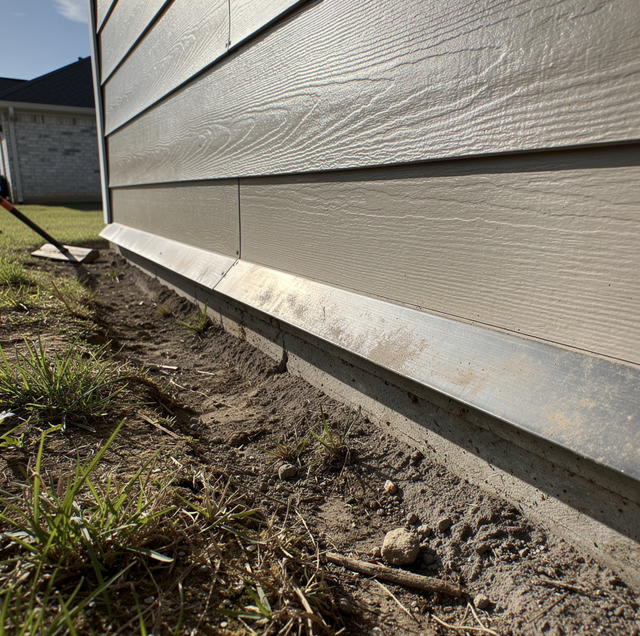
Neither fiber-cement nor engineered-wood siding usually fails in the middle of a flat, uncut board. Both hold up fine there for a long time. Where they fail is at the handful of places where a board stops being a flat surface and becomes an edge, a joint, a hole, or a line of fasteners: the cut end, the seam between two lengths, the bottom row closest to the ground, a penetration for a fixture or vent, and the nail line itself. Compare fiber-cement and engineered wood at those specific points, in heat and humidity, and choosing between them for your project gets more concrete than a general reputation contest.
The Cut Edge
Every board on a job gets cut somewhere: at a corner, around an opening, at the end of a run. Both fiber-cement (the category James Hardie made mainstream) and engineered wood (the category most associated with LP SmartSide) start with a factory treatment on the face and back that resists moisture. A field cut removes that protection and exposes the raw substrate underneath, on either product.
Fiber-cement: The cut edge is a dense cement-and-cellulose composite. Left unsealed, the cut face wicks water into the sheet at a rate the finished faces never see, and the resulting swelling lifts the coating from beneath rather than weathering it from above. Manufacturers direct installers to seal every field-cut edge with the finish system used on the face, not skip it because trim will cover it later.
Cutting fiber-cement siding releases fine crystalline silica dust. Use a vacuum-shrouded saw or shears rather than a dry abrasive blade, work outdoors or in open air, and keep others clear of the cutting station until dust settles.
Engineered wood: The cut edge exposes a wood-strand core bonded with resin. That core takes on moisture faster than the cut edge of fiber cement does, and once it does, the strands swell before anything visibly cracks or peels on the face. The manufacturer's edge-sealing instruction isn't optional trim advice; manufacturers publish it as an installation condition, and an unsealed cut edge is the single most common point where engineered wood fails early.
The Butt Joint Between Boards
Fiber-cement doesn't move much with temperature or humidity, so a butt joint can be cut tight, but it still needs a gap behind flashing or a joint cover, per the manufacturer's instructions, because a joint with nowhere to shed water traps whatever gets behind it. The board is also brittle at that joint: a light impact on a square-cut corner is more likely to chip out a small triangle than to dent it.
Engineered wood's strand core expands and contracts more with humidity, so the joint experiences real seasonal movement, not just a theoretical risk. A butt-joint sealant or shielded joint behind the seam has to tolerate that movement without splitting away. Where fiber-cement's joint failure is usually a blocked water path, engineered wood's is more often a sealant bead that couldn't keep up with the board swelling and shrinking underneath it.
The Bottom Course and the Clearance Line
The bottom row of siding sits closest to standing water, splash-back off a hard surface below it, and, where a lower roof plane ties into the wall, runoff from that roof. Manufacturers publish a minimum clearance from grade and from any hard surface, and a minimum step above a roof-to-wall transition, because capillary draw and splash reach higher than most homeowners expect.
Fiber-cement tolerates incidental splash and standing moisture at the bottom course far better than an untreated wood product would. It is not immune: a bottom course installed at or below the published clearance still fails, just more slowly than engineered wood in the same spot.
Engineered wood is less forgiving of the bottom course sitting too close to grade or a hard surface. Where a roof plane meets a wall below the siding line, the wall side of that junction needs a small metal flashing, a kick-out, that pushes runoff away from the wall face instead of behind the bottom course. That detail is siding and trim work, not roofing, and it matters more on the wood-strand product.
Penetrations and Trim Transitions
Anywhere a fixture, vent, or hose bib passes through the wall plane, the siding has to be cut to fit around something round or irregular, then sealed against it, without leaving a gap that lets water track down behind the plane.
Fiber-cement is rigid and brittle at a small, tight cutout: cutting a circle close to a board's own edge is exactly where a hairline crack is likeliest to start. A clean, sealed fit around a penetration takes more care in fiber-cement than almost anywhere else in the installation.
Engineered wood cuts and fits around penetrations more forgivingly. The risk shifts to the seal itself: if the caulk or trim ring fails later, the wood-strand core swells at that exposed edge before anything looks wrong on the face, the same pattern as an unsealed cut edge, just smaller and easier to miss under a fixture.
The Fastener Line
Every board is held on by a line of fasteners, spaced and driven to the manufacturer's pattern, but the two materials respond to a nail gun differently enough that a crew switching between them has to reset how it works.
Fiber-cement takes a fastener with a hard, mineral resistance: drive one at the pressure set for wood and it either sits proud, doesn't seat flush, or blows straight through the face in a small starburst crack around the fastener head. Getting the depth right on fiber-cement is a settings problem more than a technique problem.
Engineered wood takes a fastener with a softer, absorbing give, closer to solid lumber, and is far more forgiving of a slightly hot gun. The risk here is longer-term: a fastener that sits proud, or a head that breaks the factory coating, opens a small path for moisture to reach the strand core around that one nail, well after the crew has moved on.
The Finish Itself
How a coating behaves on each substrate is a subject of its own; what belongs here is that engineered wood's coating failures start at the cut, joint, and fastener holes covered above rather than out in the field of the board, which is why the edge-sealing discipline decides the finish as much as the finish product does.
Fiber-cement: The board arrives either factory-primed for field paint or with a factory-applied color coat cured on before it ships, and which of the two is on the wall decides what happens at every cut and every nail head. A factory-finished board gets touched up with the manufacturer's matched color rather than with whatever is left in the garage, and that touch-up belongs to the install rather than to a punch list.
Engineered wood: The factory coating is not only color. It is part of what keeps moisture out of the strand core, so a scrape from a strap, a saw horse, or a boot is a breach rather than a blemish. Correcting one on the ground takes a brush and a minute. Finding the same scrape after the wall is closed in means going back up to it for a defect nobody can see from the driveway.
Handling Decides More of This Than Climate Does
The failure points sort out cleanly enough to lay side by side, and read across the rows, the two products sit closer together than their reputations do.
| Failure point | Fiber-cement | Engineered wood |
|---|---|---|
| Cut edge | Dense, moisture-resistant core; still needs sealing | Wood-strand core; swells fastest if left unsealed |
| Butt joint | Minimal movement; failure is usually a blocked water path | More seasonal movement; failure is usually a sealant that couldn't keep up |
| Bottom course | Tolerates incidental splash well | Less forgiving of grade or hard-surface proximity |
| Penetrations | Brittle at a tight cutout; needs careful sealing | Cuts and fits easily; risk moves to the seal itself |
| Fasteners | Hard resistance; can crack if overdriven | Softer give; more forgiving to drive |
| Finish | Stable substrate holds paint evenly | Substrate movement can lift finish from beneath |
| Weight and handling | Heavy and brittle; cutting is a controlled operation | Lighter and easier to cut, carry, and fit on site |
What separates the two on most projects is not on that list at all. Fiber-cement is heavy, brittle in handling, and cutting it correctly is a controlled operation with its own dust and edge-care requirements. On a single-story wall with easy staging and full access, that trade is worth making for the moisture and insect resistance it buys. On an upper-story wall, a tight site with nowhere to stage full sheets, or a wall with difficult scaffold or ladder access, the same weight and care become the slowest part of the day, and engineered wood, lighter to carry at height and easier to cut and fit on site, is the build that gets finished properly.
The limit worth naming: On either material, edge sealing is nearly the entire product. Every cut end, every notch around a fixture, every rip along a rake leaves a raw face that has to be coated before it goes on the wall, and it is the step most likely to be skipped by a crew that is already behind. That makes the useful question at the quote stage how the cut edges are sealed and who checks them, rather than which board is bought.
A siding choice holds up or fails at the same handful of places no matter which material goes up: the cut, the joint, the bottom row, the penetration, the fastener, and the finish. Get those details right on either material and the wall does its job for a long time. Skip them, and the more moisture-resistant board only takes longer to show it.
Frequently Asked Questions
Fiber-cement contains no organic wood fiber for insects to feed on; engineered-wood siding is a wood-strand product, and manufacturers address that risk by treating the strands with a borate-based preservative before the panel is pressed and sealed.
Hot-dip galvanized or stainless-steel fasteners are specified for fiber-cement, not because an ordinary carbon-steel nail fails structurally, but because a standard fastener rusts and bleeds a visible streak down a painted or factory-finished face well before the siding itself shows wear.
No. HardieBacker is a cement backer board made to go under tile in wet areas like a shower surround or tub deck, a different product line from fiber-cement siding boards, and it is not rated for use as an exterior siding material on its own.
Scoring the face with a carbide-tipped tool and snapping the board along that line produces close to zero airborne dust compared with any saw cut, and manufacturers list it as the preferred method for straight, shorter cuts, reserving a dust-collecting saw or shears for long rip cuts and detail work.
Yes. Engineered-wood siding should be stored flat, off the ground, and kept covered from rain and ground moisture until installation, because the strand core will take on ambient moisture and begin to swell before a single fastener goes in if left stacked outdoors uncovered.
Usually not, if the job is done correctly. A re-side typically means stripping the wall down to the sheathing rather than building over the existing siding, since that's the only way to inspect and redo the flashing, house wrap, and moisture barrier underneath, details a cover-over would just bury again.
Put the failure points on the table before you pick a siding — a walk of the wall with a builder settles the cut, joint, and clearance details that decide either material. Palacios Construction Group serves Willis, Conroe, and The Woodlands. Call (936) 828-8664.
