Polybutylene and Galvanized Pipe: What a Repipe Replaces
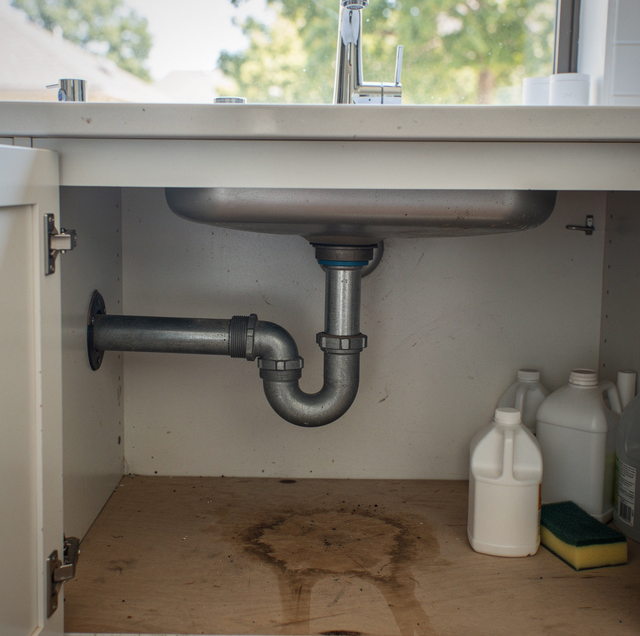
Rusty water on the first draw, a shower that quits when a toilet is flushed, water audible inside a wall: those three together point at the supply piping rather than at any one fixture. What the pipe is made of can be settled by a homeowner in an afternoon. What to do about it belongs to a plan, because reaching the pipe means opening the finished surfaces in front of it, and that work gets folded into a remodel or an addition that was going to open them anyway.
Reading What Is Already in the Walls
Pipe is visible in more places than people assume: at the water heater connections, behind a sink cabinet, at the laundry box, and wherever a line crosses an attic. Dull threaded steel with a fitting at every direction change reads as galvanized immediately, while a flexible plastic line is worth identifying properly, since more than one plastic system looks alike.
The water reports on the inside, which no one looks at, reach the outside. Let a house sit unused for a week, then open a cold tap. The first water out arrives tinted, somewhere between pale yellow and orange-brown, and clears once the line has run. That's settled corrosion product pushed ahead of fresh water, and the color returns whenever the water sits long enough.
Run that first-draw test at the lowest fixture in the house, where settling collects, and time how long the water takes to run clear. The clearing time reports more about how far the narrowing has gone than the color does.
Flow that will not share: A line that has lost its opening can't feed two fixtures at once. Open a shower, flush a toilet, and the shower doesn't dip and recover; it falls away and stays. Full-diameter pipe carries reserve. A narrowed bore has none left to lend.
Noise in the wall: Push the same volume through a smaller opening, and the water moves faster; fast water in a roughened bore is audible. You hear a rush behind the drywall when a fixture opens, and the pitch shifts when a second one opens elsewhere. The house didn't make that sound when it was new.
Galvanized Steel Corrodes from the Inside Out
Galvanized pipe is steel with a zinc coating hot-dipped onto it, and the zinc is the entire defense. Decades of moving water wear that coating thin, and it thins first at the threads, where cutting a thread strips coating and metal in one pass. The thread root is the thinnest steel in the assembly and the first place water reaches bare iron.
What corrosion does to the bore: Once steel is exposed, it rusts, and rust occupies more room than the steel it came from. So the pipe doesn't simply get thinner; it grows inward. Hard nodules build along the inside wall, heaviest at fittings and along horizontal runs where debris settles, and a half-inch line can lose a large share of its opening while the outside still looks sound.
Warmer water drives the reaction faster, so the hot side shows it first, and every change in direction is another threaded fitting, which is why a pinhole usually opens at a joint.
Polybutylene and the Way the Market Left It
Polybutylene is flexible plastic tubing, usually a dull gray, run in half-inch and three-quarter-inch sizes and joined with insert fittings and crimped bands. It was produced for potable water plumbing from the late 1970s until the mid-1990s, so a house built or replumbed inside that window is the one worth checking. It arrived as a real improvement on the labor of plumbing a house: light, quick to run, and able to bend around framing rather than turn with a fitting.
The difficulty, as the trade came to describe it, was oxidation working from the inside. Treated water carries disinfectant, which attacks the polymer at the tubing's wetted surface. The material answers with microcracking that begins on the water side and works outward. The original acetal insert fittings were understood to be more vulnerable than the tubing itself, and a crimped joint concentrates stress at the point where the material loses toughness.
The outside gives nothing away, so a visual check reads clean until a line lets go, and failures land at fittings rather than mid-run, at points already closed inside a wall. The material left the market the way materials do when confidence goes: manufacturers stopped making it for potable water, and supply houses stopped stocking it.
What Gets Replaced and What Stays
A repipe is a supply job. It replaces the pressurized hot and cold lines from where water enters the house out to each fixture, along with the fittings, risers, and stops under the sinks and toilets. The water heater connections come apart, since the lines feeding them are new.
Supply, not waste: Drains, waste lines, and vents run on slope at atmospheric pressure rather than under pressure, and they stay put unless the layout moves a fixture. A house can have a failing supply pipe and perfectly serviceable drains.
In a slab house, the original lines under the concrete are abandoned in place and capped, because chasing them out would mean breaking the floor of every room they cross. Two boundaries sit at the edges of the job: the underground service line from the meter is its own work, and a shower valve body buried behind tile stays put until a bathroom scope opens that wall.
The Openings a New Route Requires
The first decision isn't the material. It's the route. In a slab house, the new lines usually go overhead, through the attic, and down inside the wall to each fixture. That leaves the slab whole and moves every opening into walls and ceilings, which is why a repipe gets folded into planned work instead of standing alone.
Where walls open: not one large opening, but many small ones, at every point the pipe has to be reached or turned. Behind each vanity, at each shower valve, and anywhere a line passes a top plate or turns inside a cavity. Upstairs, the ceiling beneath the fixtures also comes down. What can be routed through a wall that carries load is limited.
A wall cavity opened for pipe can hold energized wiring, and how far a stud or a top plate in a bearing wall can be bored or notched is a question for an engineer. Neither is homeowner work.
The same open wall usually raises the electrical question at once, which is best left to a licensed master electrician.
When the water comes back on, the job isn't finished. Everyone is doing drywall repair, texture, primer, and paint, in rooms that had nothing wrong with them. A patch in a sprayed wall stays visible until the whole wall is retextured, and one repainted wall can read differently from its neighbors. A homeowner who hears "two-day pipe swap" and gets three rooms of drywall repair was not told what the job is.
PEX and Copper, and What Decides Between Them
Two materials go back in, and the house decides between them more than the materials do.
PEX: Crosslinked polyethylene arrives in coils, bends through framing that rigid pipe needs fittings to get around, and doesn't accumulate scale the way steel does. Fewer fittings means fewer joints, and joints are where systems leak. Its constraints are real: it sags across an unsupported span and needs support at intervals, and sunlight degrades it, so it belongs inside walls.
Copper: Rigid tube joined with soldered or pressed fittings, tolerant of heat, and familiar to any plumber who opens that wall in thirty years. The rigidity is its retrofit penalty. Every turn is a fitting, and every fitting has to be reachable while it's made, which means another opening cut in finished drywall. Aggressive water at high velocity can pit the inside of a copper line over time, a chemistry question plastic doesn't raise.
What decides is geometry and exposure: whether an overhead route exists, how many direction changes the plan forces, and what the water does to metal. Long horizontal runs and awkward framing push toward PEX.
Where a Partial Repipe Stops
Doing part of a house creates a transition point where new material meets old. Everything upstream of it is still the original system, and the fixtures that improve are the ones fed downstream.
That point belongs where the house's own feed suggests, at a main takeoff or a branch serving one group of fixtures, rather than wherever the drywall happened to stop. A boundary drawn by the remodel's edge, rather than by the plumbing's logic, leaves a new line hanging off a corroded feed.
It matters most at the far end of the house. Flow arriving at a fixture is governed by the worst section along the path leading to it, so the bathroom at the end of the longest run reads about the same after a partial repipe as before, regardless of how much new tubing sits behind it. Deciding where to stop is the same question as deciding which fixtures the work is for.
Frequently Asked Questions
Polybutylene carries a printed material designation along the tubing, PB2110; PEX carries its own designation and standard. PEX is commonly run in red and blue to separate hot from cold; polybutylene was made in a uniform tone with no hot-cold coding, and in blue for the buried service line.
Where copper was joined directly to galvanized steel, that joint becomes the fastest-corroding point. Two dissimilar metals, with water between them, form a galvanic cell, and the steel gives up material to protect the copper. A dielectric union or a brass transition fitting interrupts that, and older partial work wasn't always done with one.
A magnet settles the metal question: it grabs galvanized steel and ignores copper and brass. The catch is where you hold it. Water heaters are commonly connected with steel nipples, so a magnet at the heater can read steel in a house piped entirely in copper. Test the pipe a foot back from any connection.
No. A manifold runs a separate line from a central distribution block to every fixture, so each has its own shutoff and can be isolated without shutting the house down. Trunk-and-branch, a main line with branches teeing off it, uses less tubing and makes fewer passes through framing. Because a manifold is a fixed piece of equipment with shutoffs on it, it goes where it can be reached: a utility wall or a closet, not behind finished cabinetry.
The system gets pressurized and watched before a sheet of drywall goes back. The lines are capped, brought up to pressure and held, and any drop means a joint to find while everything is reachable, then flushed of installation debris before the fixtures are connected. Closing a wall over an untested system turns a minor joint problem into a ceiling repair.
A heater that has spent years on a corroding steel system holds sediment that keeps migrating into new lines afterward, which is why its condition gets read while the connections are apart. The temperature-and-pressure relief discharge line is part of the same assembly and is often reworked then, too.
Piping is the one system in a house that gets chosen once and then inherited. Somebody picked it in a year the current owners had nothing to do with, and it has been narrowing or aging quietly ever since. What keeps it a decision rather than a worry is that the answers are few: what the material is, where it can be reached, and how far a new system should run.
Fold the repipe into the work that is already opening walls — the routing, the wall openings, and the finish repair get scoped as one plan, with a licensed master plumber coordinating the plumbing. Palacios Construction Group serves Willis, Conroe, and The Woodlands. Call (936) 828-8664.
